 English
 Italian
 Spanish
 Turkish
 Portuguese
 Dutch
Dutch Korean
 Russian
 French
 German
 Polish
 Arabic
 Hindi
HindiWhy Portable Smart Displays Are Becoming Essential for Modern Commercial Spaces
Commercial spaces are changing. Offices are no longer designed only for fixed meeting rooms, retail stores are paying more attention to flexible customer interaction, and hospitality businesses are looking for better ways to deliver information across different areas. These changes have created new requirements for display equipment.
Traditional televisions and fixed commercial screens still work well for many permanent installations, but they often become less practical when businesses need to move displays between rooms, adjust layouts frequently, or create temporary interactive areas.
A display installed on one wall can only serve one location. When a company needs a presentation screen for a training session, a product demonstration area for a retail campaign, or an information display for a temporary event, moving traditional equipment can require additional installation work and time.
Portable smart displays provide a different approach. By combining a high-quality screen, smart operating system, wireless connectivity, and mobile design, these devices allow businesses to use visual communication tools in more flexible ways.
For companies evaluating new display solutions, the key question is no longer only about screen size or resolution. The more important consideration is whether a display system can support different environments, improve operational efficiency, and adapt to changing business needs.
Why Traditional Fixed Displays Are Becoming Less Flexible for Modern Businesses
Fixed commercial displays have been widely used in retail stores, offices, education facilities, and public spaces for many years. They remain an effective choice when the application is permanent and the viewing location rarely changes.
However, modern business environments often require more flexibility.
Retail brands frequently adjust store layouts, launch seasonal campaigns, and create temporary product zones. Corporate offices may need the same display equipment for meetings, training sessions, and collaborative projects in different rooms. Educational institutions often require screens that can move between classrooms or activity areas.
A fixed display system creates several limitations:
· Installation depends on a specific location and mounting structure.
· Relocation requires additional labor and technical support.
· Different departments may need separate display equipment.
· Temporary events often require additional rental equipment.
· Content presentation becomes limited by physical placement.
For businesses with multiple usage scenarios, the equipment utilization rate becomes an important factor.
A display that remains attached to one location may only serve one purpose. A mobile smart screen can support several applications throughout the day, increasing the value of the investment.
For example, a company may use one portable smart display in the morning for an internal meeting, move it to a training area in the afternoon, and use it for customer presentations later in the day.
This type of flexibility is becoming an important consideration when companies evaluate commercial display solutions.
What Makes Portable Smart Displays Different from Traditional Screens
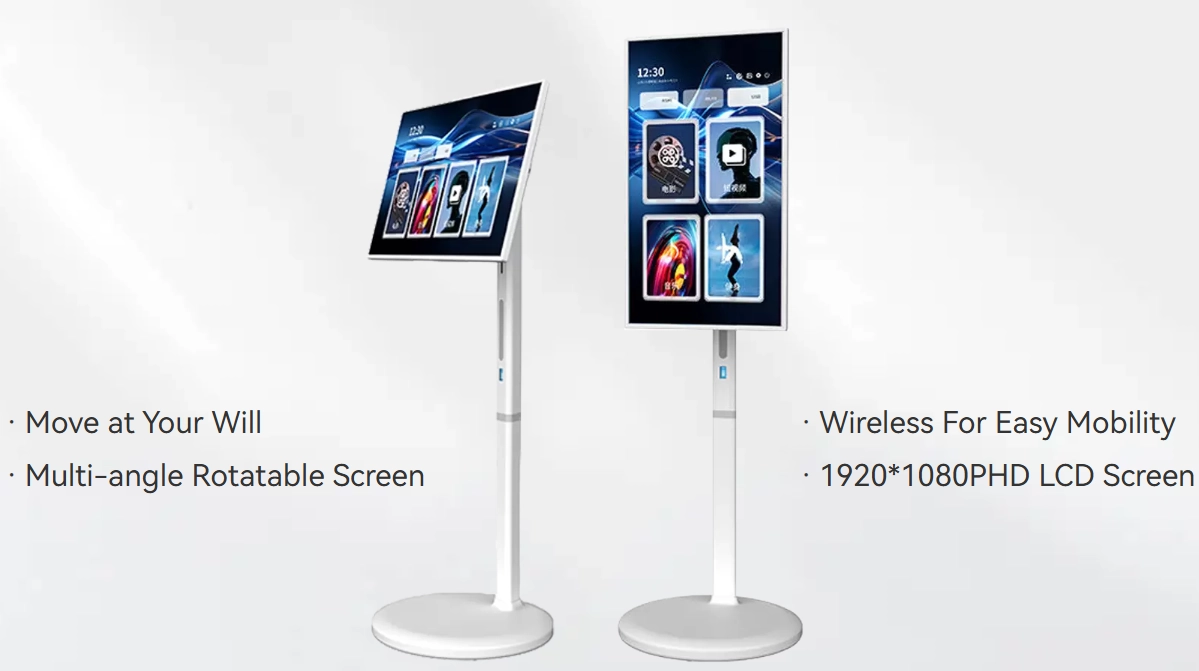
A portable smart display is not simply a smaller television with wheels. The value comes from combining display technology, computing capability, and mobility into one integrated solution.
Businesses are increasingly looking for equipment that can perform multiple functions without requiring complicated installation.
The main differences between traditional screens and portable smart displays can be seen in several areas.
Feature | Traditional Fixed Display | Portable Smart Display |
Installation | Requires fixed mounting or dedicated space | Can be moved between locations |
Usage scenarios | Usually designed for one area | Supports multiple environments |
Connectivity | Often depends on wired connections | Supports wireless connection options |
Operation | May require external devices | Built-in smart system available |
Application flexibility | Limited after installation | Adaptable for changing business needs |
The combination of mobility and smart functions allows portable displays to become useful tools rather than simple viewing devices.
Important features that businesses usually evaluate include:
· Integrated operating systems for easier content access and management
· Wireless connectivity for faster setup in different locations
· Touch interaction options for customer engagement and collaboration
· Adjustable viewing angles for different environments
· Mobile structures that support quick repositioning
A portable smart display can support a wide range of applications because it is designed around usage flexibility rather than a single installation purpose.
How Mobility Improves Display Applications Across Different Industries
The demand for mobile display solutions is growing because businesses are creating more dynamic environments.
A restaurant may need promotional content near different customer areas. A hotel may require information screens for events and guest services. A company may need a display that can move between conference rooms.
Portable display equipment helps organizations respond to these changing requirements.
Retail and Brand Experience
Retail environments depend heavily on customer attention. Static posters and traditional advertising methods often provide limited interaction.
A portable smart display can be moved to different areas based on customer flow, seasonal campaigns, or promotional activities.
Common retail applications include:
· Product demonstrations
· Interactive product catalogs
· Brand promotion areas
· Customer education displays
· Temporary campaign displays
The ability to reposition the screen allows retailers to optimize their display strategy without rebuilding the physical environment.
Corporate Offices and Meeting Spaces
Modern workplaces require more flexible collaboration tools.
A meeting room may need a display for presentations, but the same equipment can also support training sessions, workshops, or employee communication.
Portable collaboration displays reduce dependence on fixed conference rooms and allow teams to create temporary working spaces.
Common office applications include:
· Mobile presentation screens
· Training room displays
· Video conferencing support
· Team collaboration areas
· Internal communication displays
For companies with flexible office layouts, mobility can improve how existing space is used.
Education and Training Environments
Schools and training organizations are also adopting more flexible display systems.
A traditional classroom display usually stays in one location. A portable smart display can support different teaching environments, including classrooms, laboratories, workshops, and group learning spaces.
Educational applications include:
· Interactive lessons
· Digital teaching materials
· Online learning sessions
· Group discussions
· Mobile classroom setups
The combination of mobility and interactive functions makes these displays suitable for modern learning environments.
Why Wireless Connectivity Matters in Portable Display Solutions
Mobility only creates value when the display can operate efficiently after being moved.
Wireless connectivity has become a critical part of portable smart display design because businesses want faster deployment without complex cable management.
When a display needs to move between different locations, relying heavily on wired connections can reduce convenience and increase setup time.
Wireless functions help businesses:
· Connect devices faster during meetings and presentations
· Reduce installation requirements
· Support flexible room layouts
· Improve temporary event setups
· Allow easier content sharing between devices
For example, a sales team preparing a customer presentation may need to move a display from a meeting room to an exhibition area. A wireless smart display allows the team to complete the setup with fewer technical steps.
This is particularly valuable for companies managing multiple spaces where display requirements change frequently.
Why Battery Performance Influences the Practical Value of Mobile Displays
Mobility is one of the main reasons businesses consider portable smart displays, but the actual value depends on whether the device can maintain reliable performance after being moved away from a fixed power source.
A portable display used in commercial environments needs to support real working conditions. A product that frequently requires charging interruptions or cannot support extended operation may create inconvenience during important activities such as exhibitions, presentations, training sessions, or customer demonstrations.
Battery performance has become an important factor in evaluating mobile display equipment because businesses are looking for solutions that can operate smoothly across different scenarios.
A well-designed portable smart display should support:
· Extended operating time for meetings, presentations, and events
· Stable performance when moved between different areas
· Quick setup without depending on permanent installation points
· Reduced cable management requirements
· Flexible placement in temporary or changing environments
For example, an exhibition company may use a portable smart display at different booths during a multi-day event. A hotel may move the same display between conference rooms, reception areas, and guest spaces based on daily requirements.
In these situations, mobility is not only about adding wheels or reducing weight. The real advantage comes from creating a display system that can continue working efficiently wherever it is needed.
How Smart Functions Improve the Efficiency of Commercial Display Management
The role of display equipment has changed significantly. Businesses no longer use screens only for showing images or videos. Many organizations now require displays that can support content management, interaction, communication, and data sharing.
A modern smart display combines hardware and software functions to simplify daily operations.
Traditional display systems often depend on external devices such as media players, computers, or additional control systems. This can increase installation complexity and create more maintenance requirements.
A smart display solution integrates more functions into one system, helping businesses reduce unnecessary equipment and improve operational efficiency.
Important smart features include:
· Built-in operating systems for easier application management
· Wireless connectivity for faster device connection
· Remote content updates for multiple displays
· Touch interaction for customer engagement
· Compatibility with different business applications
For companies managing multiple locations, remote management is especially valuable.
A retail brand operating stores in different cities may need to update promotional information across many locations. A digital signage system with centralized management allows content teams to control displays more efficiently without sending technicians to every store.
This approach is becoming common in:
· Retail chains
· Shopping malls
· Transportation facilities
· Hotels
· Corporate offices
· Educational institutions
The purpose of smart display technology is not simply adding more functions. The goal is improving how businesses communicate information and interact with users.
Portable Smart Displays Support More Flexible Business Models
The increasing demand for portable display solutions is connected with a broader change in how businesses use physical spaces.
Many organizations no longer operate with completely fixed environments. Offices use shared spaces, retailers adjust layouts regularly, and event companies create temporary installations.
A display system that can adapt to these changes provides additional value.
Compared with traditional fixed screens, portable smart displays offer more opportunities for companies that need flexible visual communication.
Typical applications include:
Industry | Common Applications | Display Requirements |
Retail | Product promotion, customer interaction, temporary campaigns | Bright display, easy movement, touch function |
Education | Mobile teaching, classroom interaction, training | Interactive features, clear viewing angles |
Hospitality | Guest information, event support, service communication | Simple operation, flexible placement |
Corporate | Meetings, presentations, collaboration | Wireless connection, screen sharing |
Healthcare | Information delivery, patient communication | Reliable operation, easy management |
Different industries have different requirements, but the common demand is flexibility.
A portable smart display allows organizations to adjust their communication methods without investing in multiple fixed systems.
Why Display Quality Still Matters in Portable Smart Display Selection
Although mobility and smart features attract attention, display quality remains one of the most important factors in purchasing decisions.
A commercial display is often used for long periods and viewed by many users. Poor image quality can reduce communication effectiveness and affect brand presentation.
Businesses should evaluate several display factors before choosing equipment.
Resolution and Image Clarity
Higher resolution helps ensure that text, images, and videos remain clear, especially in applications such as:
· Product demonstrations
· Digital advertising
· Training materials
· Interactive presentations
Clear visual output is important because many commercial displays are designed to deliver detailed information rather than simple entertainment content.
Viewing Angle
A display installed in public or commercial spaces is rarely viewed from only one position.
Wide viewing angles help maintain consistent image quality when users approach the screen from different directions.
This is particularly important for:
· Shopping malls
· Exhibitions
· Reception areas
· Training rooms
Screen Durability
Commercial environments usually require equipment that can handle frequent operation.
Procurement teams should consider:
· Panel quality
· Heat management
· Operating stability
· Protection design
· Long-term reliability
Choosing a display based only on initial price may create higher maintenance costs in the future.
How Businesses Should Select a Portable Smart Display Manufacturer
For companies purchasing display equipment in volume, choosing the right supplier is as important as selecting the product itself.
A reliable portable smart display manufacturer should provide more than standard hardware. Long-term cooperation often depends on engineering capability, production experience, and customization support.
Before selecting a supplier, buyers should evaluate several areas.
Product Development Capability
Display requirements vary between industries. A hotel project may require different functions compared with a retail advertising system or educational application.
A manufacturer with strong development capabilities can support:
· Customized screen sizes
· Different operating systems
· Software integration
· Appearance design adjustments
· Specific application requirements
Manufacturing Experience
Production capability directly affects delivery reliability and product consistency.
Important factors include:
· Quality control procedures
· Production capacity
· Component management
· Testing processes
· Export experience
OEM and ODM Support
Many brands prefer working with manufacturers that can provide customized solutions rather than purchasing identical products available in the market.
Smart display OEM and ODM services allow businesses to develop products based on their own requirements.
Typical customization areas include:
· Hardware configuration
· Branding elements
· Product appearance
· Software functions
· Packaging solutions
A supplier with OEM/ODM experience can help companies create products that better match their target markets.
The Future Direction of Portable Display Solutions
The development of portable smart displays reflects a larger shift in commercial communication.
Businesses are moving away from single-purpose display equipment and looking for solutions that provide greater flexibility, easier management, and broader application possibilities.
Future commercial display systems will likely focus on:
· Better wireless integration
· More efficient content management
· Stronger interaction capabilities
· Improved energy efficiency
· Wider application across industries
The demand is also increasing for displays that combine entertainment, communication, advertising, and collaboration functions in one device.
For example, a portable smart screen can serve as a presentation tool in a company, a promotional display in a store, and an information terminal during an event.
This multi-purpose capability helps organizations maximize equipment value.
How Fvasee Supports Flexible Smart Display Applications
As businesses continue to require more adaptable visual solutions, selecting an experienced display partner becomes increasingly important.
Fvasee develops and manufactures a range of smart display products, including portable smart displays, commercial displays, digital signage solutions, interactive displays, and customized display systems.
With experience in smart display manufacturing and OEM/ODM cooperation, Fvasee supports businesses that need reliable solutions for different applications.
Whether the requirement involves a portable smart TV for flexible environments, a commercial display for customer communication, or a customized smart display solution for a specific project, the right combination of hardware capability and application understanding helps companies build more effective visual communication systems.
Portable smart displays are becoming an important option for businesses that need more flexibility from their visual communication equipment. The value is not only the ability to move a screen from one location to another, but the ability to support different working environments with fewer limitations.
Retailers can use mobile displays to create adaptable customer experiences. Companies can improve meeting and training flexibility. Educational organizations can create more interactive learning environments. Hospitality businesses can provide better information services across different spaces.
When selecting a portable smart display solution, businesses should consider more than appearance or screen size. Display quality, operating stability, wireless capability, software functions, and manufacturer experience all influence long-term performance.
A professional smart display manufacturer can help organizations choose equipment that fits real application needs instead of simply providing another screen.
As commercial environments continue to become more flexible, portable smart displays will play a larger role in helping businesses communicate, collaborate, and engage with users more effectively.