 English
 Italian
 Spanish
 Turkish
 Portuguese
 Dutch
Dutch Korean
 Russian
 French
 German
 Polish
 Arabic
 Hindi
HindiHow to Choose the Right Interactive Display Manufacturer for Your Business
Interactive display technology has become an essential part of education, corporate collaboration, retail, healthcare, and digital communication. Interactive flat panels, touch displays, portable smart TVs, and integrated commercial display solutions are now widely used to support hybrid learning, conference collaboration, customer engagement, and smart workspace management.
As demand continues to expand, more distributors, private-label brands, and system integrators are sourcing products directly from manufacturers rather than relying solely on trading companies. This shift gives buyers greater control over product specifications, branding, pricing, and long-term product planning. At the same time, it makes supplier selection considerably more important.
Choosing an Interactive Display Manufacturer is no longer simply a purchasing decision. Manufacturing capability influences product consistency, software stability, production schedules, certification compliance, and after-sales support throughout the product lifecycle. An attractive quotation alone rarely reflects the supplier's ability to support future product upgrades, maintain stable quality, or scale production as business grows.
For companies building their own display product portfolio, selecting the right Interactive Display Manufacturer has become a strategic investment in long-term competitiveness rather than a short-term procurement exercise.
Why Choosing the Right Interactive Display Manufacturer Matters
Many suppliers offer products that appear similar in specifications, yet the manufacturing capabilities behind those products can vary significantly. Display technology combines hardware engineering, software development, precision assembly, quality testing, and supply chain coordination. Weakness in any of these areas can affect the finished product delivered to customers.
An experienced Interactive Display Manufacturer contributes value beyond production capacity. Buyers should consider whether the manufacturer can consistently deliver products that meet commercial expectations over several years.
A reliable manufacturing partner typically offers advantages such as:
- Consistent product quality across multiple production batches.
- Stable lead times during peak purchasing seasons.
- Technical support throughout product development.
- Reliable firmware and software maintenance.
- Long-term availability of replacement components.
- Better project coordination for large-volume orders.
For distributors and OEM brands, dependable manufacturing reduces warranty claims, protects brand reputation, and creates greater confidence when expanding into new markets.
Manufacturing Experience Reflects Production Reliability
Years of manufacturing experience often indicate how well a factory has adapted to changing technologies, market requirements, and production challenges.
A manufacturer with more than 20 years of industry experience has typically refined its production workflow through thousands of commercial projects. Rather than relying on trial and error, experienced engineering teams develop standardized manufacturing procedures that improve consistency from design to final inspection.
Manufacturing experience is reflected in several practical areas.
First, mature production processes reduce variation between different manufacturing batches. Consistency becomes especially important when supplying distributors who require identical products over multiple years.
Second, experienced factories usually maintain stronger supplier relationships. Stable sourcing helps reduce production interruptions caused by component shortages or inconsistent material quality.
Third, engineering teams accumulate practical knowledge from previous projects. This allows them to identify design issues before mass production begins, reducing costly revisions later.
An established Interactive Display Factory generally demonstrates greater confidence when handling customized projects because it has already solved similar engineering challenges for previous customers.
Rather than viewing years of operation as a marketing figure, procurement teams should consider manufacturing experience as evidence of operational stability and accumulated technical expertise.
OEM and ODM Capabilities Create More Flexible Solutions
Modern buyers increasingly require products tailored to their own markets instead of purchasing identical off-the-shelf models.
An experienced OEM Interactive Display Manufacturer supports customers who already have product specifications and branding requirements. Production follows the customer's design while maintaining consistent manufacturing quality.
An ODM Interactive Display Manufacturer, on the other hand, provides additional engineering resources by assisting customers with product development, structural optimization, software customization, and industrial design.
Comprehensive OEM and ODM services commonly include:
| Capability | Customer Benefit |
|---|---|
| Product appearance customization | Supports brand differentiation |
| Logo printing | Builds brand recognition |
| Packaging design | Creates consistent retail presentation |
| Software customization | Meets regional or industry requirements |
| Hardware configuration | Adapts products for different applications |
| Sample development | Validates designs before mass production |
| Private label production | Enables faster market entry |
Flexible manufacturing allows customers to respond more effectively to changing market demands while avoiding the high investment required for independent product development.
This capability becomes particularly valuable for companies expanding product portfolios under their own brands.
Quality Control Is More Than Product Inspection
Many suppliers emphasize final inspection, but comprehensive quality management begins long before finished products reach the packaging line.
A professional Interactive Display Manufacturer integrates quality control throughout the entire production process instead of relying solely on end-of-line testing.
An effective quality management system typically covers:
- Incoming inspection of electronic components and display panels.
- Process monitoring during assembly.
- Functional testing after hardware integration.
- Software verification.
- Reliability testing.
- Final performance inspection before shipment.
International certifications further demonstrate that manufacturing procedures follow recognized standards. Many global buyers evaluate whether suppliers operate under systems such as:
- ISO 9001 Quality Management
- ISO 14001 Environmental Management
- CE Certification
- FCC Compliance
- RoHS Compliance
- UL-related requirements where applicable
These certifications alone do not guarantee product quality, but they indicate that manufacturing processes follow documented procedures with continuous improvement mechanisms.
Equally important is traceability.
Advanced factories maintain production records that link finished products to production dates, component batches, and inspection data. When issues occur, traceability enables faster investigation and corrective action, minimizing disruption for overseas customers.
Quality control therefore extends well beyond product inspection—it represents a complete manufacturing philosophy that reduces risk throughout the supply chain.
Strong R&D Helps Manufacturers Stay Competitive
Interactive display products evolve rapidly. Screen technologies, Android platforms, touch systems, wireless collaboration features, and AI-assisted applications continue to advance, requiring manufacturers to invest consistently in research and development.
Factories with dedicated technology centers generally respond faster to changing customer requirements than manufacturers focused solely on production.
Strong R&D capabilities support customers in several ways.
New hardware platforms can be introduced more efficiently, helping brands remain competitive in rapidly changing markets.
Software teams can customize operating systems, user interfaces, or collaboration features according to customer requirements.
Engineering departments can optimize mechanical structures for different installation environments, improving reliability while reducing manufacturing costs.
For buyers planning long-term cooperation, R&D capability influences much more than innovation. It determines whether future product updates can be completed without changing manufacturing partners.
Manufacturers investing in digital production technologies, automated assembly systems, and product innovation are generally better positioned to support customers over multiple product generations.
This makes research and development one of the most important evaluation criteria when selecting a Smart Display Manufacturer or Touch Display Manufacturer.
Global Supply Capability Supports Long-Term Partnerships
Manufacturing excellence alone is not enough for international business. Successful export projects require coordination across production, logistics, documentation, technical support, and after-sales service.
Global buyers increasingly evaluate whether an Interactive Display Supplier can maintain stable deliveries while supporting projects across different regions.
Several factors contribute to dependable international supply capability:
- Efficient production scheduling.
- Export-compliant packaging.
- Reliable logistics coordination.
- Complete shipping documentation.
- Technical support before and after delivery.
- Spare parts availability.
- Long-term product maintenance.
For large educational deployments, commercial display installations, or government procurement projects, supply continuity becomes particularly important. Customers often require identical products over several years rather than a single purchasing cycle.
Manufacturers with established export experience generally understand regional certification requirements, customs procedures, and international shipping standards more thoroughly than suppliers focused only on domestic markets.
This experience reduces project uncertainty and improves delivery reliability for overseas partners.
Selecting the right Interactive Display Manufacturer involves much more than comparing quotations or product specifications. Manufacturing experience, engineering capability, quality management, OEM/ODM flexibility, research and development, and global supply support all influence the long-term success of a business partnership.
For distributors, private-label brands, and system integrators, an experienced manufacturing partner helps ensure consistent product quality, stable deliveries, and ongoing technical support as markets continue to evolve. These capabilities reduce operational risk while providing greater flexibility for future product expansion.
Companies seeking an Interactive Display Manufacturer should therefore evaluate the factory as carefully as they evaluate the product itself. A supplier capable of supporting product development, maintaining certified production systems, and providing reliable international service creates considerably more value than one competing only on price.
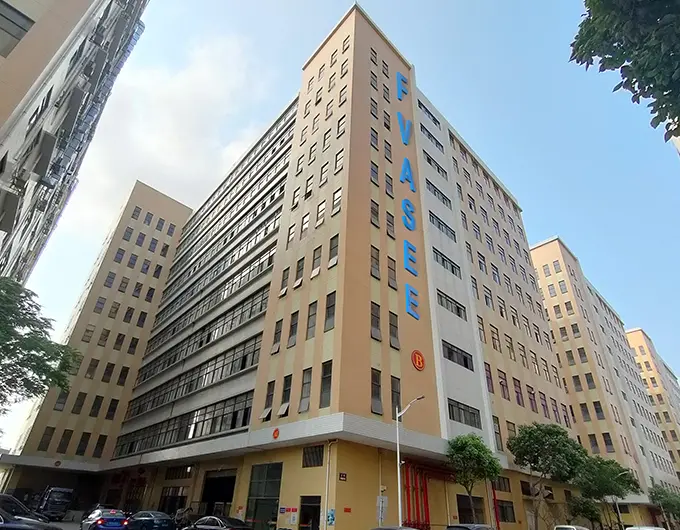
With more than 20 years of manufacturing experience, FVASEE provides OEM and ODM solutions covering interactive displays, portable smart TVs, and commercial smart display products. Supported by ISO-certified manufacturing systems, multi-stage quality control, dedicated R&D resources, and integrated production management, the company works with global distributors, education solution providers, brands, and system integrators to develop reliable display products for diverse commercial and educational applications.