English
 Italian
 Spanish
 Turkish
 Portuguese
 Dutch
 Korean
 Russian
 French
 German
 Polish
 Arabic
 Hindi
StandBy Me TV vs Traditional Smart TV: What Is the Difference?
A television usually has a fixed place in the home. It sits on a TV cabinet or hangs on the wall, with the rest of the room arranged around it. For many households, this setup works perfectly well. The screen is easy to access, the cables stay in place, and there is no need to think about moving it.
But home layouts and viewing habits are changing. People may want to watch a program in the bedroom, follow a cooking video in the kitchen, or use a larger screen for a video meeting in the study. Buying a separate television for every room is not always practical.
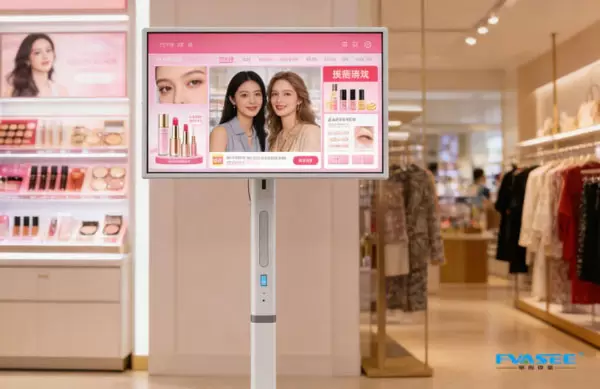
This is where the StandBy Me TV comes into the picture. Built around a mobile stand, it gives users more freedom to position the screen wherever it is needed. It offers many of the functions found in a traditional smart TV, while its movable design makes it suitable for a different way of using a screen at home.
The choice between these two options is not simply about which one has more features. It comes down to how people use their space, where they prefer to watch content, and whether a fixed installation still meets their needs.
The Difference Starts with Where the Screen Lives
A traditional smart TV is usually part of the room's permanent arrangement. The living room is a common example. The sofa faces the screen, the TV cabinet provides storage, and the viewing area remains largely unchanged.
This arrangement has its advantages. A wall-mounted television keeps the floor clear, while a cabinet-mounted model provides a stable position for everyday viewing. For households that mainly watch films, sports, and television programs in one place, there may be little reason to change anything.
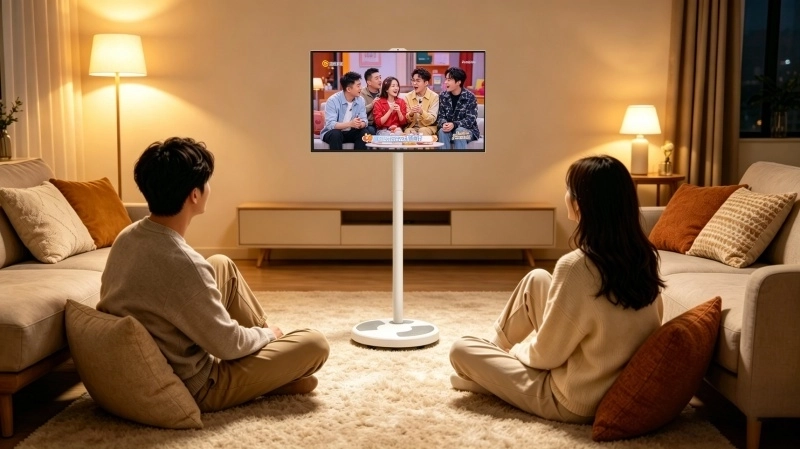
A StandBy Me TV is designed around a different idea. The screen sits on a rolling stand, so it does not have to remain in one corner of the room. Users can move it closer to a sofa, position it beside a desk, or take it into another suitable room.
The difference becomes more noticeable in homes where one room serves several purposes. A study may also be used for entertainment, while a bedroom might double as a quiet space for reading or online learning. A mobile screen can follow these activities instead of requiring users to arrange their daily routines around a fixed television.
This does not mean that traditional TVs cannot be moved. Smaller models on stands can be relocated, and some TV stands come with wheels. However, frequent movement is not usually the main consideration in conventional TV design. A portable smart display puts that requirement at the center of its structure.
A Rolling Stand Makes a Different Kind of Viewing Possible
The stand is one of the most important parts of a portable television. It is not simply a base for holding the screen. It determines how easily the display can be moved, where it can be placed, and how comfortably users can watch it.
With a fixed television, the viewing position is largely decided during installation. Changing it may involve moving furniture, adjusting the TV cabinet, or arranging another wall mount.
A Smart TV on Wheels offers more flexibility. The screen can be rolled to a suitable position when needed and moved away when the space is being used for something else. This can be particularly useful in smaller homes, rental properties, and rooms that do not have a dedicated entertainment area.
Screen adjustment also deserves attention. Depending on the model, a portable display may support height adjustment, tilt adjustment, or screen rotation. These functions can help users position the display according to their seating arrangement and the type of content being viewed.
For example, landscape orientation works naturally for films, television programs, and presentations. Portrait orientation may be more convenient for vertical videos or applications designed for a mobile-style display.
A rolling stand does have practical requirements. The floor should be reasonably level, and the wheels need enough clearance to move through doorways and around furniture. The base should remain stable during use, and users should avoid placing the display where it could be easily knocked over.
Mobility is valuable when it makes everyday use easier. A well-designed stand should make moving the screen feel straightforward rather than becoming another piece of equipment that takes up space.
Smart Functions Matter More Than the Shape of the TV
The portable design is easy to notice, but smart functionality is equally important.
A StandBy Me TV is not simply a monitor attached to a stand. Depending on its configuration, it can provide access to online entertainment, streaming applications, wireless connectivity, and other smart functions. Many models use an Android-based system, allowing users to access supported applications directly on the display.
Traditional smart TVs offer similar functions. Both product types may support online video, wireless networks, and connections with external devices. The actual experience depends on the operating system, hardware, software version, and application compatibility.
For households, the main question is whether the display can support the content and services they already use.
Wireless screen casting is another useful feature. Users can share content from compatible smartphones, tablets, or computers without having to connect a cable every time. This can be convenient when showing family photos, playing a video, or sharing information during a meeting.
Touch functionality is also available on selected portable display configurations. It may be useful for interactive applications, browsing, learning, or certain work tasks. However, buyers should not assume that every StandBy Me TV has a touchscreen. The feature needs to be confirmed against the specifications of the selected model.
Feature | Traditional Smart TV | StandBy Me TV |
Online entertainment | Common on smart TV models | Available on supported models |
Wireless connectivity | Available on many models | Depends on configuration |
Screen casting | Supported by many models | Available on compatible models |
Touch operation | Less common | Available on selected models |
Mobile placement | Depends on the stand or installation | Central to the product design |
Screen adjustment | Varies by TV and mounting system | Depends on stand and display design |
For buyers, the product name alone is not enough. Operating system, application support, connection options, and touch functionality should all be checked before an order is confirmed.
Does a Portable TV Need a Built-In Battery?
Power supply can make a noticeable difference to the way a portable display is used.
A conventional television normally stays close to a power outlet. This is rarely a problem in a fixed entertainment area because the installation can be planned around the available sockets.
A portable screen may be used in several rooms, so the position of the power outlet becomes more relevant. Some models offer a built-in battery as an optional configuration. This can make short-term relocation more convenient and reduce the need to connect the display to an outlet every time it is moved.
However, not every Portable Smart TV operates on battery power. Some models require a direct power connection, while battery availability and performance depend on the actual configuration.
Before choosing a portable TV with battery support, buyers should pay attention to the following details:
l Whether the battery is included or offered as an optional feature.
l The stated battery capacity and operating time.
l Whether continuous video playback affects battery performance.
l Charging arrangements and whether the display can operate while charging.
l Battery replacement and after-sales service arrangements.
Battery life should be considered in relation to actual viewing habits. Watching videos for an extended period may place different demands on the battery compared with occasional use for browsing or video calls.
For someone who usually watches TV beside a power outlet, a battery may not be necessary. For a household that regularly moves the screen between rooms, it may be a useful addition.
The important point is to choose the power configuration based on how the display will actually be used, rather than treating a built-in battery as a requirement for every portable television.
Where Does a StandBy Me TV Fit into Everyday Home Life?
The value of a mobile display becomes clearer when looking at the different ways people use their homes.
Living Room: More Freedom Without Changing the Whole Layout
A traditional smart TV remains a sensible choice for a living room with a dedicated entertainment area. It can be wall-mounted or placed on a cabinet, with seating arranged around the screen.
A portable display offers another option for households that prefer a more flexible layout. It can be moved closer to the seating area for casual viewing and repositioned when the room is needed for other activities.
This can be helpful in apartments and smaller homes where every part of the room has to serve a purpose.
Bedroom: A Screen That Can Be Moved When Needed
Not every bedroom has enough space for a TV cabinet or a wall-mounted screen. A mobile display can be positioned beside the bed or near a chair, then moved away when the floor area is needed.
Height and angle adjustment, where available, can also make it easier to position the screen according to the user's preferred viewing position.
For users who want a permanent bedroom television, a conventional model may still be the more straightforward option. The portable design is particularly relevant when the screen is not needed in the same place all the time.
Home Office: Work and Entertainment on the Same Display
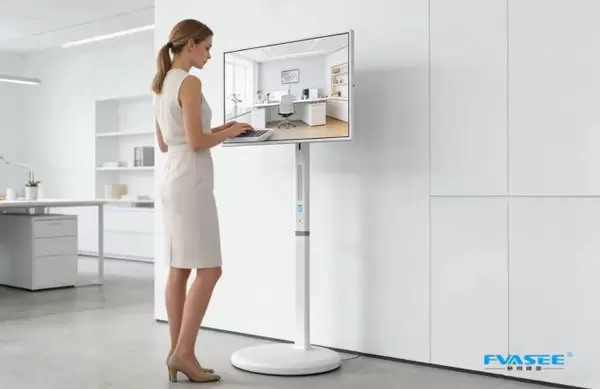
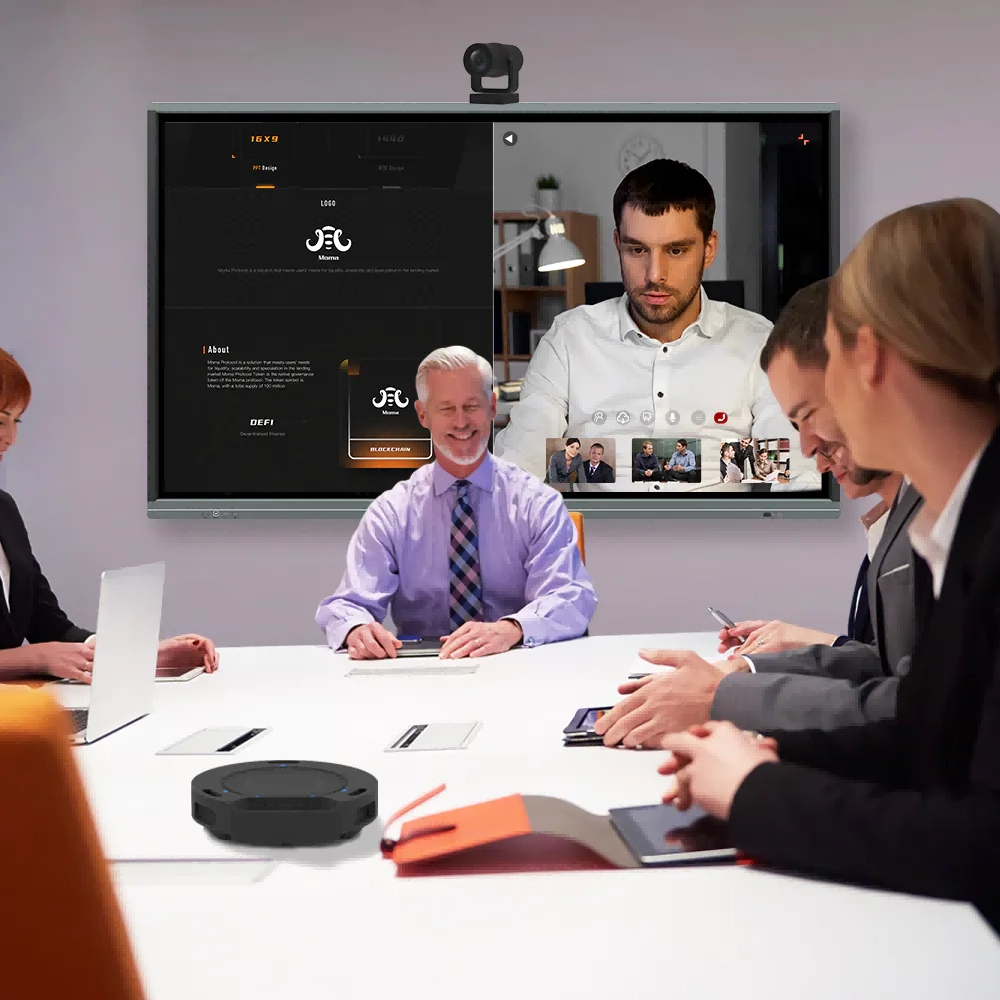
A home office may need a screen for video meetings, presentations, online training, or reference materials. Once work is finished, the same display can be used for entertainment.
A mobile smart display can be positioned near the desk during working hours and moved to another area afterward. Wireless casting and compatible device connections can make sharing content more convenient.
It is not necessarily a replacement for a dedicated computer monitor. The more relevant advantage is that it can serve different activities without being permanently tied to one workstation.
Kitchen and Shared Spaces: Useful, with Careful Placement
Some households use a screen for cooking tutorials, recipes, music, or background entertainment. A rolling display can be brought into a suitable viewing area and moved away after use.
Placement matters in these environments. The screen should be kept away from water, excessive heat, cooking grease, and areas where the stand could obstruct movement. A mobile television is not intended to be placed directly beside a sink or cooking surface.
Learning, Exercise, and Personal Activities
A portable display can also support online lessons, exercise videos, video calls, and personal hobbies. Users can position the screen according to the activity rather than relying on a fixed viewing area.
For families with different schedules, this flexibility may be more useful than having another television permanently installed in a separate room.
When Is a Traditional Smart TV Still the Better Choice?
A mobile display is not the right answer for every household. There are situations where a conventional television remains more practical.
A large living room with a dedicated entertainment area may benefit from a wall-mounted TV or a larger screen on a stable cabinet. Users who mainly watch content from the same sofa may have little need for a rolling stand.
A fixed installation can also create a cleaner arrangement when the position of the screen, power supply, and connected devices has already been planned. Wall mounting is especially useful when floor space is limited and the television does not need to move.
For home cinema use, screen size and the overall viewing setup may matter more than mobility. Buyers should consider the available viewing distance, sound system, room lighting, and seating arrangement before deciding on a portable model.
There is also no need to treat the two categories as direct replacements. Some households may prefer a large television in the living room and a smaller portable display for bedrooms, study areas, or occasional use elsewhere.
The better choice is the one that fits the way the household watches content. Mobility is useful when people need it regularly. When the screen stays in one place, a fixed television may be all they need.
What Buyers Should Check Before Choosing a Portable Smart TV
A portable television involves more than selecting a screen size. The stand, operating system, power arrangement, and available adjustment functions all affect the experience.
Screen size and viewing distance
A larger display may be more suitable for shared viewing, while a compact screen can be easier to position in a bedroom or study. Buyers should consider both the viewing distance and the space occupied by the complete stand.
Stand structure and stability
Check the base dimensions, wheel design, height adjustment, and overall stability. If the display will be moved between rooms, measure doorways and consider the floor surface.
Screen rotation and adjustment
Confirm whether the selected model supports portrait and landscape rotation, tilt adjustment, or height adjustment. These functions vary between products and should not be assumed to be standard.
Operating system and application compatibility
Check the operating system, supported applications, wireless network connection, and screen casting compatibility. Application availability may vary by region and software version.
Power configuration
Confirm whether the display uses direct power or offers a built-in battery option. If battery operation is important, request the manufacturer's battery specifications and operating conditions.
Touchscreen and optional features
Touchscreen functionality, battery support, and other configuration options should be confirmed before purchasing. For distributors and project buyers, a detailed specification sheet is useful when comparing different models or preparing an OEM or ODM order.
FVASEE Portable Smart TV for Flexible Home Viewing
FVASEE offers portable smart display options for households looking for more flexible ways to use a television. The product range includes different screen sizes, with configurations designed around mobile placement and everyday smart entertainment.
Depending on the selected model, available features may include an Android operating system, rolling stand, adjustable screen position, wireless screen casting, built-in battery options, and touchscreen or non-touchscreen designs.
This range gives buyers room to select a display according to their intended use. A compact screen may suit personal viewing or a study area, while a larger option may be more appropriate for shared entertainment and home office activities.
FVASEE also provides OEM and ODM services for business customers. Distributors, retailers, and project purchasers can discuss requirements such as screen size, stand design, operating system, battery configuration, and touch functionality with the company.
For buyers comparing a traditional television with a mobile display, the key is to look beyond the appearance of the product. The selected configuration should match the actual room layout, viewing habits, and expectations for daily use.
Making the Right Choice for Your Home
Traditional smart TVs are still a practical choice for permanent entertainment areas. Their fixed installation works well when the screen has a dedicated position and the household rarely needs to move it.
A StandBy Me TV offers a different kind of convenience. Its rolling stand allows the screen to move with the user, making it suitable for homes where viewing takes place in more than one room. Smart functions, screen adjustment, and optional battery support can add to that flexibility, depending on the model.
There is no need to choose mobility simply because it is available. The important question is whether moving the screen would make everyday life easier. For households that value flexible placement and shared use, a Portable Smart TV with Wheels can be a practical addition to the home.
For product details, available configurations, or OEM and ODM cooperation, contact the FVASEE team to discuss your requirements.