 English
 Italian
 Spanish
 Turkish
 Portuguese
 Dutch
Dutch Korean
 Russian
 French
 German
 Polish
 Arabic
 Hindi
HindiWhy Does Picture Frame Digital Signage Fit Modern Commercial Interiors?
A digital display does not always need to look like a piece of electronic equipment. In a hotel lobby, boutique store, restaurant, showroom, or gallery, the screen is part of the interior. Its frame, size, orientation, and position can affect the overall appearance just as much as the content shown on it.
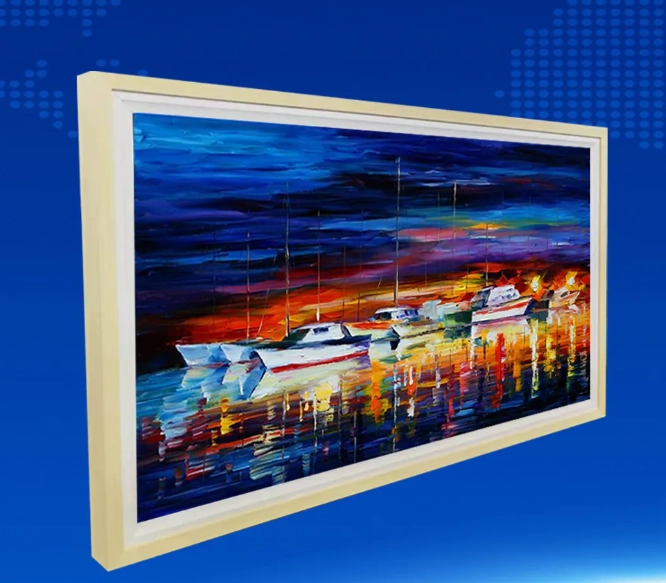
This is where Picture Frame Digital Signage has a practical advantage. It combines a digital display with a frame-style structure, allowing advertising and information to be presented in a form that is closer to wall artwork. For businesses that care about both visual presentation and content flexibility, this format offers a more suitable alternative to a conventional commercial monitor.
The difference is not only about appearance. Installation options, screen orientation, content playback, split-screen functions, brightness adjustment, and remote content management all affect how the display works in a real commercial environment.
Why Does the Appearance of Digital Signage Matter?
A screen installed in a commercial space is rarely viewed on its own.
Customers see it together with walls, furniture, lighting, signs, decorations, and other visual elements. If the display looks noticeably different from everything around it, it can become a distracting object rather than part of the space.
This can be particularly noticeable in:
· Hotel reception areas
· Boutique retail stores
· Restaurants and cafés
· Showrooms
· Exhibition spaces
· Galleries
· Property sales offices
· Brand experience areas
A conventional digital signage screen usually has a clear commercial appearance. That works well in supermarkets, transportation facilities, and other environments where information delivery is the main priority.
A picture-frame format takes a different route. The frame gives the screen a more decorative appearance, making it easier to place alongside artwork, photographs, promotional graphics, or other wall-mounted displays.
For interior-focused businesses, this small change in product form can make a significant difference.
Can a Digital Display Become Part of the Interior?
The answer depends largely on where the display is installed.
Consider a boutique hotel. The reception area may use carefully selected furniture, wall finishes, lighting, and artwork to create a particular atmosphere. Adding a standard commercial monitor may provide the required digital content, but the screen can also look noticeably different from the rest of the interior.
A picture-frame display can fit into that setting more naturally.
The frame becomes part of the physical presentation, while the screen provides the changing content. A hotel can display welcome messages one day, promotional images the next, and event information when required without changing the physical installation.
The same approach works in retail.
A store can use the display for product photography, seasonal promotions, brand videos, or campaign graphics while keeping the same frame on the wall.
This gives the product two functions at the same time:
a permanent decorative structure and a changeable digital communication surface.
What Types of Commercial Spaces Suit Picture Frame Digital Signage?
The product is most useful where the appearance of the display matters alongside its ability to show changing content.
A restaurant may place it near the entrance to present featured dishes or seasonal offers. A hotel can use it for guest information, event notices, or promotional material. A showroom can display product images and videos without adding several different printed posters to the wall.
Other suitable locations include:
· Retail stores
· Hotels
· Restaurants
· Cafés
· Exhibition halls
· Brand showrooms
· Galleries
· Reception areas
· Commercial property sales centers
The content does not have to remain purely promotional. Depending on the installation, the screen can also present photographs, notices, menus, schedules, brand stories, or other visual information.
That flexibility makes the product useful in spaces where printed wall materials would otherwise need to be changed frequently.
Why Are Frame Options Important?
Commercial interiors rarely use exactly the same style.
One project may have a simple modern interior, while another may use warmer colors and decorative materials. A luxury hotel may require a more refined appearance, while a retail store may want the frame to follow its brand identity.
The product supports multiple frame styles and color options, allowing the physical appearance to be considered together with the interior.
This can be useful when several displays are installed across different areas of the same property.
Instead of treating the screen as a separate piece of equipment, the frame can be matched with:
· Wall finishes
· Furniture
· Existing picture frames
· Brand colors
· Decorative elements
· Lighting arrangements
The purpose is not to make the frame more noticeable. It is to make the complete installation look intentional.
Why Does Horizontal or Vertical Installation Matter?
Wall space is not always available in the same shape.
A narrow wall beside a reception desk may work better with a portrait display. A wider wall above a counter may be better suited to a landscape format.
The ability to install the display horizontally or vertically gives businesses more freedom when deciding where the screen should go.
It also affects the type of content that can be displayed effectively.
A portrait arrangement may suit:
· Fashion photography
· Product posters
· Portrait images
· Promotional artwork
· Event posters
A landscape arrangement can work well for:
· Product videos
· Menus
· Brand videos
· Wide-format photography
· Promotional campaigns
The orientation can therefore be determined by the wall and the content instead of forcing every project into one fixed layout.
Does 1080P HD Still Make Sense for Indoor Signage?
Screen resolution should be considered together with screen size and viewing distance.
A picture-frame display is commonly viewed from relatively short distances in indoor commercial spaces. Customers may walk past it, stand several meters away, or look at it while waiting at a reception desk.
For these conditions, a 1080P HD display can provide suitable image quality for many types of content, including promotional images, videos, menus, and general information.
The more important question is whether the resolution matches the actual application.
A small display viewed from a short distance has different requirements from a large screen installed several meters away. Similarly, a simple promotional image has different visual demands from detailed technical graphics.
For procurement teams, screen resolution should therefore be considered alongside:
· Screen size
· Viewing distance
· Content type
· Image detail
· Installation position
This gives a more realistic basis for choosing the display configuration.
What Can Split-Screen Playback Add?
A picture-frame display does not have to show one full-screen message at a time.
The product supports multiple split-screen layouts, with up to 26 layout forms. Different areas of the screen can be used for different types of content, and the layout can be adjusted according to the application.
For example, a restaurant could display a featured dish in the main area while showing a smaller promotional message beside it.
A retail store could combine product photography, pricing information, and a short promotional video.
A hotel could display an event image together with the event time and location.
This approach allows more information to be presented within one display without installing several separate screens.
The practical value of split-screen playback depends on the content. A simple advertisement may work better in full-screen mode, while information-heavy content can benefit from clearly separated areas.
How Does Remote Content Release Help Commercial Operators?
Changing the physical display is not necessary every time the content needs to be updated.
The product supports local offline layout as well as remote content release. Local operation allows users to prepare playback layouts, set image rotation intervals, select transition effects, and arrange background music.
Remote release becomes more useful when several displays need to be managed.
For example, a retailer with multiple stores may need to replace a promotional campaign across different locations. A hotel group may need to update event information. A showroom may want to replace product videos after a new campaign begins.
Instead of visiting every display individually, content can be updated remotely.
This is particularly useful for businesses where advertising changes frequently.
Why Is Automatic Brightness Adjustment Useful Indoors?
Indoor lighting changes throughout the day.
A display near a window may receive strong natural light during the afternoon and much less light in the evening. A restaurant can have brighter lighting during the day and a darker atmosphere at night.
The product uses intelligent photosensitive technology to adjust screen brightness according to ambient light.
This helps avoid two common situations.
When the surrounding light becomes strong, a screen with insufficient brightness can become harder to read. When the room becomes darker, excessive screen brightness can make the display unnecessarily prominent.
Automatic adjustment allows the display to respond to these changes without requiring staff to repeatedly adjust the settings.
For a picture-frame display installed as part of an interior, this is particularly useful because the screen needs to remain visible without overpowering the surrounding environment.
Can the Same Display Support Different Content Over Time?
Yes, and this is one of the main practical differences between digital and printed wall displays.
A printed poster has a fixed message until someone replaces it. A framed photograph remains unchanged unless it is physically exchanged.
A digital picture-frame display can change its content while keeping the same frame and installation position.
A retailer can replace a spring campaign with a summer promotion. A restaurant can update featured dishes. A hotel can replace event information after a conference ends.
The physical appearance stays consistent while the content changes according to the business schedule.
This makes the display particularly useful for locations where visual information changes frequently.
What Should Buyers Check Before Ordering?
Appearance is an important part of this product, but it should not be the only consideration.
A practical evaluation should cover the complete configuration.
Display Specifications
Check the screen size, resolution, brightness, viewing distance, and intended content.
Frame Configuration
Confirm the available frame style, color, dimensions, and customization options.
Installation
Make sure the selected model supports the required horizontal or vertical installation and fits the available wall space.
Playback
Check support for images, videos, cycle playback, split-screen layouts, and the required content formats.
Content Management
Determine whether local offline playback is enough or whether remote content release is required.
Operating Environment
Consider the surrounding lighting, expected operating hours, installation location, and maintenance arrangements.
These details are more useful than simply comparing one specification between different suppliers.
Picture Frame Digital Signage Combines Decoration With Digital Content
The value of Picture Frame Digital Signage comes from the combination of its physical form and digital functions.
The frame gives the display a more decorative appearance, while the digital screen allows businesses to change advertising, images, videos, menus, notices, and other content without replacing the physical unit.
Horizontal and vertical installation provides more flexibility for different wall layouts. Split-screen playback allows several content areas to operate on one screen. Local and remote content release supports different management requirements, while intelligent photosensitive technology adjusts the display to changes in surrounding light.
For hotels, restaurants, retail stores, showrooms, galleries, and other presentation-focused commercial spaces, these features can make the difference between simply mounting a screen on a wall and making the display feel like part of the space.
The product is therefore best considered not simply as another advertising monitor, but as a digital display built around the visual language of framed wall presentation.