 English
 Italian
 Spanish
 Turkish
 Portuguese
 Dutch
 Korean
 Russian
 French
 German
 Polish
 Arabic
 Hindi
Where Can Portable Smart TVs Replace Traditional Fixed Displays?
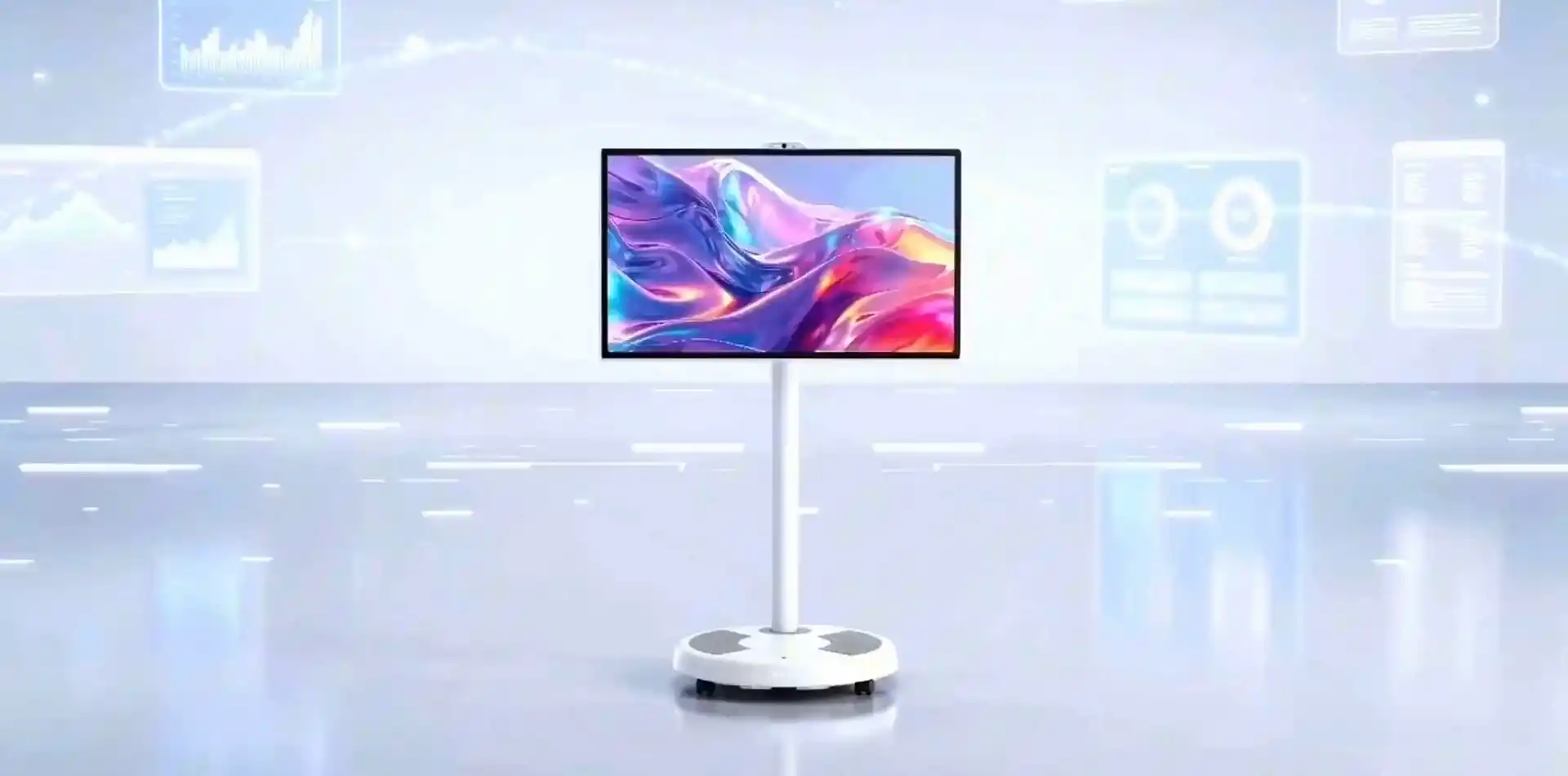
Traditional televisions are usually installed in fixed positions, such as living room walls, bedroom cabinets, or meeting room corners. While this setup works for regular viewing, it can create limitations when users need a display in different rooms or shared spaces. A portable smart TV offers another approach, combining a movable screen, smart entertainment functions, and flexible positioning in one device.
With the growing demand for adaptable home entertainment and flexible commercial displays, portable smart TVs are becoming a practical option for households, hotels, fitness studios, and retail environments. Instead of installing multiple fixed screens, users can move one display between different locations according to their needs.
Why Are Traditional Fixed Displays Not Suitable for Every Space?
Fixed televisions provide a stable viewing position, but their installation often depends on room layout, wall structure, and available power connections. Once installed, changing their position may require additional mounting work or cable adjustments.
In homes, a television in the living room may not be convenient for someone who wants to watch videos while cooking or exercising. In commercial environments, a fixed display may also limit how businesses arrange their spaces for different activities.
Several common situations highlight these limitations:
Limited viewing locations: A wall-mounted TV is generally designed for one specific viewing area.
Space arrangement restrictions: Furniture changes and room renovations may affect the original viewing position.
Multiple display requirements: Families or businesses may need screens in several areas, increasing equipment and installation costs.
Limited flexibility: Fixed displays are not easy to reposition for temporary activities, presentations, or events.
A portable smart TV addresses these situations through a movable structure and flexible screen positioning.
How Does a Portable Smart TV Support Different Home Environments?
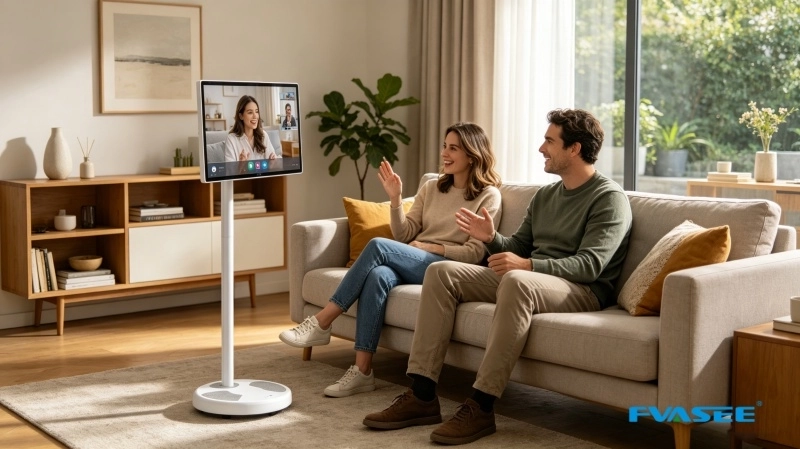
Home entertainment is no longer limited to the living room. People watch streaming content, attend online classes, follow workout videos, and make video calls in different parts of their homes. A portable smart display can support these activities without requiring a separate television in every room.
Bedroom and Living Room Entertainment
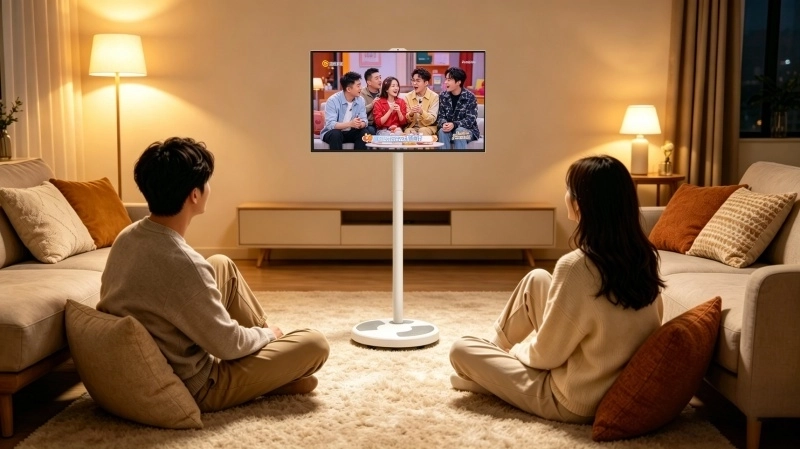
A portable smart TV can serve as an additional entertainment screen in bedrooms, guest rooms, or shared living spaces. Its movable base allows users to position the screen near a sofa, bed, or other viewing area.
For households with changing room arrangements, a rolling smart TV provides more flexibility than a permanently installed television. The screen can be repositioned when different family members want to use it.
Kitchen and Dining Area
Kitchen activities often involve short periods of video viewing, such as following cooking tutorials, watching news, or playing entertainment content during meal preparation.
A portable smart TV can be positioned where the screen is visible without occupying a permanent countertop space. Height adjustment and screen rotation can also help users find a more comfortable viewing angle, depending on the model.
Home Fitness and Online Learning
Home workouts and online learning require displays that can be positioned according to the activity.
During exercise, users may need to view instructional videos from different positions. For online learning, the display can be moved closer to a desk or shared study area.
A portable touchscreen display with wireless connectivity can also support interactive applications, depending on its hardware and software configuration.
What Makes a Portable Smart TV Suitable for Commercial Use?
Portable smart TVs are not limited to residential entertainment. Their mobility and smart display functions can also support businesses that need adaptable screens for different spaces.
Hotels and Airbnb
Hotels and short-term rental properties often have different room layouts and guest requirements. A portable smart TV can provide an additional entertainment option without requiring permanent wall installation.
For hospitality operators, movable displays may also simplify room layout adjustments and equipment placement. Screen size, wireless connectivity, operating system compatibility, and ease of maintenance are important considerations when selecting equipment for multiple rooms.
Fitness Studios and Wellness Centers
Fitness studios use digital displays for workout demonstrations, class instructions, and online training content.
A portable smart display can be moved between exercise areas or positioned near different training equipment. This arrangement is useful for studios that regularly change class layouts or offer different activities throughout the day.
Retail Stores and Showrooms
Retail environments frequently update product presentations, promotional videos, and customer information. A movable smart display can be positioned near featured products, demonstration areas, or temporary promotional zones.
Compared with a fixed screen, a portable display offers greater flexibility when store layouts and promotional priorities change.
Which Features Should Buyers Evaluate in a Portable Smart TV?
The value of a portable smart TV depends on more than its ability to move. Screen performance, structural design, connectivity, and power options all influence its suitability for different applications.
Screen Size and Resolution
Screen size should match the intended viewing distance and available space. Compact displays may suit personal viewing and smaller rooms, while larger screens provide more viewing area for family entertainment and commercial presentations.
For example, FVASEE offers portable smart TV models in 21.5-inch, 24-inch, 27-inch, and 32-inch sizes. The 32-inch model features a 1920 × 1080 Full HD display, providing a clear format for everyday entertainment and visual content.
Mobility and Structural Design
A portable TV with wheels should offer smooth movement and a stable base. Height adjustment and screen rotation are also useful when the display is shared by users in different positions.
The FVASEE 32-inch portable smart TV supports 180-degree screen rotation, 45-degree tilt adjustment, and 20 cm of height adjustment. Its universal wheels allow the display to move between suitable indoor spaces.
Battery Capacity and Power Options
Power requirements are another important factor, particularly when users want to position a screen away from a fixed power outlet.
Some portable smart TVs include built-in rechargeable batteries, while other configurations may rely on external power. Buyers should confirm battery capacity, operating time, charging method, and power requirements for the specific model rather than assuming all portable displays have the same configuration.
Operating System and Connectivity
The operating system determines which applications and software environments a display can support. Wireless connectivity, HDMI, USB, and Bluetooth also affect how users access content and connect external devices.
For businesses purchasing portable smart TVs in volume, software compatibility and hardware configuration should be confirmed before production.
Choosing a Portable Smart TV Manufacturer for OEM Projects
For distributors, retailers, importers, and private-label brands, product selection is only one part of a purchasing decision. Manufacturing experience, customization capabilities, production consistency, and after-sales support also influence long-term cooperation.
A reliable portable smart TV manufacturer should be able to provide clear product specifications and support different project requirements.
Important areas to evaluate include:
Product configuration: Screen size, display resolution, operating system, battery options, and connectivity.
Structural customization: Stand design, mobility components, appearance, and product dimensions.
Technical development: Hardware integration, software configuration, and sample testing.
Production quality: Component inspection, assembly standards, and finished-product testing.
OEM/ODM support: Private labeling, customized packaging, and product development for different markets.
FVASEE provides portable smart TVs in multiple screen sizes and supports OEM/ODM smart display projects. Its manufacturing services cover requirement confirmation, technical development, sample approval, production, quality inspection, and global delivery.
For buyers developing a portable smart TV product line, direct communication with the manufacturer helps clarify technical requirements and confirm whether a specific configuration is suitable for the target market.
Portable Smart TVs Offer More Flexible Display Options
Traditional fixed televisions remain suitable for spaces with permanent viewing requirements. However, homes and commercial environments that need flexible screen positioning may benefit from a portable smart TV.
From bedroom entertainment and kitchen viewing to hotel rooms, fitness studios, and retail spaces, a movable smart display provides more options for using digital content across different locations.
With multiple screen sizes, adjustable structures, smart connectivity, and optional battery configurations, portable smart TVs offer an alternative to installing a separate fixed display in every space.
For distributors and brands exploring this product category, FVASEE provides portable smart TV manufacturing and OEM/ODM customization support for different market requirements.
Contact FVASEE to discuss portable smart TV specifications, product configurations, and OEM/ODM cooperation for your next display project.